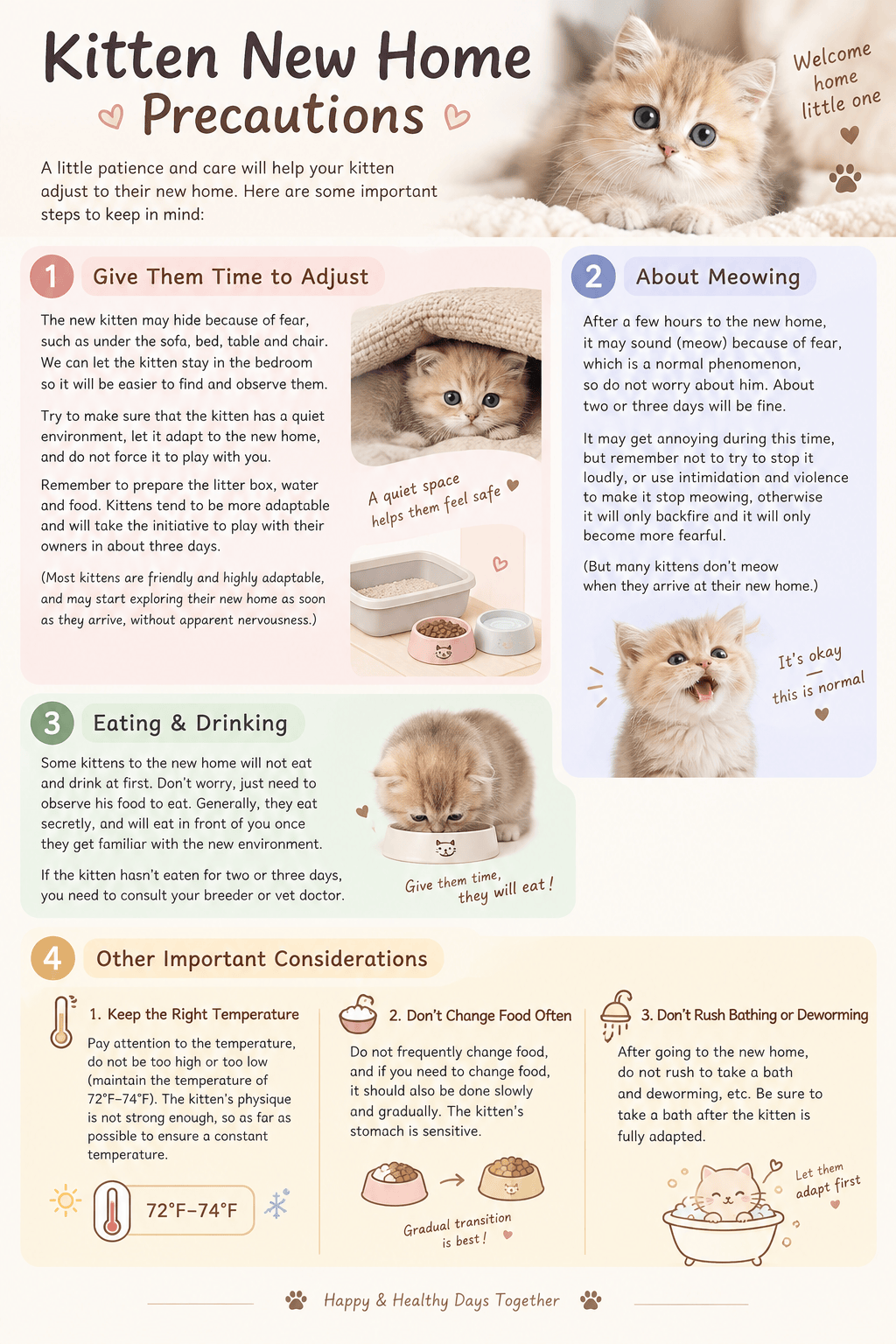
Helping Your New Kitten Feel Safe, Comfortable & Loved
Bringing a new kitten home is an exciting moment! However, moving to a new environment can also be stressful for a kitten. Every kitten is different—some may begin exploring right away, while others may need a few days to feel completely comfortable.
Here are some important tips to help your kitten settle into their new home.
1. Give Your Kitten Time to Adjust 🏡
When your kitten first arrives, they may feel nervous or overwhelmed and may hide under the bed, sofa, table, or other furniture. This is completely normal.
We recommend starting your kitten in a quiet, smaller room such as a bedroom. This makes it easier for you to observe them and helps them feel more secure while they become familiar with their new surroundings.
Please prepare:
- A clean litter box
- Fresh water
- Their regular food
- A comfortable bed or blanket
- A few safe toys
Allow your kitten to explore at their own pace. Do not force them to come out, play, or interact with you.
Most kittens are friendly and adaptable. Once they become familiar with their new surroundings and people, they will usually begin approaching you and playing on their own. Some kittens may even start exploring the entire home shortly after arriving!
2. Don’t Worry If Your Kitten Meows 🥺
Some kittens may meow more than usual during their first few hours or days at home. They may be confused or calling for familiar surroundings, people, or littermates.
This is a normal part of adjusting to a new environment.
Please do not yell at your kitten, scare them, or use intimidation to stop the meowing. This can make them even more frightened and may make the adjustment period longer.
Instead, speak softly, stay nearby, and give them reassurance and time.
That said, many kittens do not cry or meow when they arrive at their new home. Every kitten has a different personality and adjustment style.
3. Eating & Drinking 🍽️💧
It is common for a kitten to eat or drink less during the first few hours after arriving home.
Some kittens may wait until they feel completely safe before eating. They may even eat or drink quietly when no one is watching.
For the first couple of days, don’t worry if your kitten is not eating directly in front of you. Make sure fresh food and water are always available and observe their overall behavior.
If your kitten has not eaten for 24 hours, or is not drinking, appears weak, lethargic, vomits, has diarrhea, or otherwise seems unwell, please contact your veterinarian promptly. For very young kittens, lack of food can become a concern more quickly.
4. Keep the Environment Comfortable 🌡️
Kittens are sensitive to changes in temperature, especially while they are adjusting to a new home.
Try to keep the room comfortable and avoid extreme heat or cold. A temperature around 72–74°F (22–23°C) is generally comfortable for an indoor kitten.
Avoid placing the kitten directly next to an air-conditioning vent, heater, or drafty window.
5. Keep Their Food Consistent 🍗
A kitten’s stomach can be sensitive during the adjustment period.
Please avoid changing their food immediately after bringing them home. Sudden dietary changes, combined with the stress of moving, can cause stomach upset or diarrhea.
If you would like to switch to a different food, make the transition gradually over several days by slowly mixing the new food with the food they are already eating.
6. Don’t Rush Into Bathing or Other Changes 🛁
Moving to a new home is already a big change for a kitten.
Unless there is a specific medical or hygiene reason, we recommend giving your kitten time to settle in before introducing additional stressful experiences such as bathing.
The same applies to other unnecessary changes. Let your kitten first become comfortable with their new environment, routine, people, food, and litter box.
If deworming or another treatment is due, please follow the schedule provided by your breeder or veterinarian rather than giving medications on your own.
❤️ Most Importantly: Be Patient
The first few days are all about patience, consistency, and reassurance.
Your kitten may hide, meow, eat privately, or seem quieter than usual at first. These behaviors can be part of the normal adjustment process.
Give them a safe space, keep their routine consistent, speak gently, and allow them to come to you when they are ready.
Before you know it, your kitten will begin exploring, playing, cuddling, and showing you their true personality. 🐾
Welcome home, little one. May you have many happy, healthy, and loving years together! ❤️


留下评论